News
Across the stage, the screen, and social media, Burna Boy’s Denver performance proves that fans are the ones truly in control
Dec
Burna Boy’s Denver Controversy Sparks Global Debate Over Artist–Fan Boundaries
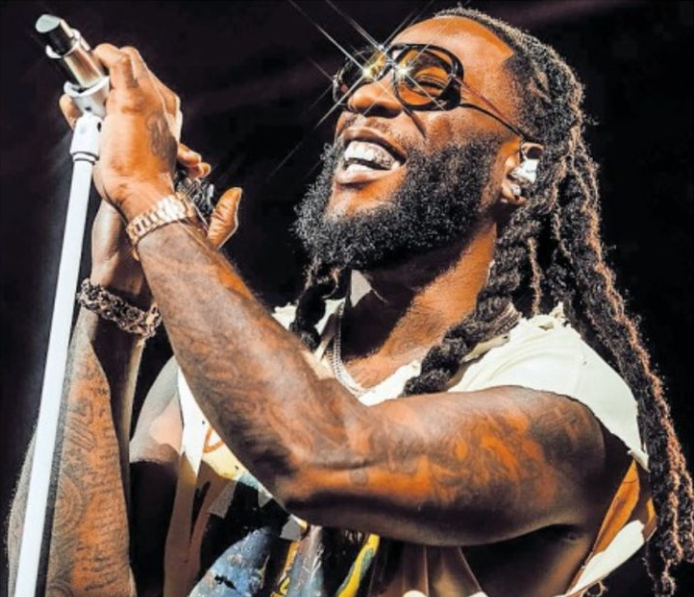
What began as a single moment during Burna Boy’s Colorado performance has rapidly evolved into one of the most heated cultural conversations in Afrobeats this year. In recent weeks, the Grammy-winning star has faced intense scrutiny after halting his show mid-performance to demand the removal of a fan he believed had fallen asleep—an incident that ignited widespread backlash across social media, fan communities, and the global entertainment industry.
The controversy unfolded on November 12, 2025, at Red Rocks Amphitheatre in Morrison, Colorado, during the North American leg of Burna Boy’s “No Sign of Weakness” tour. Only a short time into the set, the artist abruptly paused after noticing a woman in the front row with her eyes closed. Pointing directly at her, he insisted she be escorted out, warning he would not continue the concert until she and her companion were removed from the venue.
The woman was later identified as Chaltu Jateny, who revealed she had attended the concert in hopes of finding relief from the grief of losing her daughter’s father. In a series of posts on X, she explained that she had purchased her own ticket, had been emotionally exhausted for weeks, and had simply closed her eyes after waiting a long period for the show to begin. “I came to his show to put a smile on my face after everything that has happened,” she wrote. “He took forever to come out and I was tired.” She added that her brief moment of rest was harmless: “If I wanted to close my eyes, I could. It’s my money. And for those in the comments being cruel—try kindness. You never know what someone is going through.”
Within hours, video clips of the ejection spread rapidly online, drawing immediate criticism and sparking a broader conversation about artists’ responsibilities toward fans who invest significant time, money, and emotion to attend their shows.
Burna Boy Responds With Frustration
Facing mounting backlash, Burna Boy took to social media to defend himself, accusing critics of misinterpreting the moment. “I was joking around with my band about something else,” he wrote. “Y’all have spun it as usual. If you hate me so much, kill me or leave me alone. I’m fighting my personal battles.”
He continued by comparing the situation to a disruptive passenger on an airplane or a misbehaving student: “If you make a pilot uncomfortable on a flight you paid for, you’ll be deboarded. You can pay school fees and still get kicked out if you disrupt class.” Despite his defiant tone, he ended by saying, “If I’m wrong, I apologise. I’m not always right, but I feel right about this.”
His explanations, however, did little to quell the criticism.
Tour Fallout and Cancellations
In the weeks that followed, several U.S. tour dates—including stops in Minneapolis and Chicago—were quietly cancelled, with promoters issuing refunds. Multiple entertainment outlets linked the cancellations to falling ticket sales and poor attendance, attributing the decline to the viral backlash and a growing perception of friction between Burna Boy and his fanbase.
For many observers, the Denver incident was not an isolated moment but the culmination of long-standing concerns surrounding the artist’s relationship with his audiences.
A Pattern of Controversy
Burna Boy has previously been accused of abrupt or dismissive behavior during live performances. In 2024, during a show in Lagos, he kicked a fan off the stage and later said the reaction was triggered by unresolved PTSD related to aggressive crowd rushes earlier in his career.
He has also drawn criticism for perceived arrogance toward Nigerian fans. Some argue that his domestic audience tolerates behavior that international fans would reject instantly. His recent comment during an Instagram Live—“I’m only looking for fans who have money these days”—only reinforced perceptions that he regards supporters more as paying customers than valued participants in his art.
Public Reaction: Anger, Disappointment, and Division
On social media, reactions have ranged from disappointment to outright condemnation.
“Self-absorbed, childish, and emotionally unintelligent,” wrote @inkpharm. “Maybe the fan had a long shift or wasn’t feeling well. Everything isn’t about the artist.”
Another user, @ManLikeIcey, said, “There is no world where I pay for a concert and get kicked out for sleeping. Burna Boy is arrogant and violent.”
Others framed the moment as self-inflicted damage: “When your core audience is international, how do you behave like this?” asked @AfamDeluxon.
Some predicted professional consequences abroad, arguing that Western audiences are less tolerant of celebrity misconduct. “There’s a reason A-list artists pamper their fans,” wrote @Ol0ye. “Only people raised to see abuse as normal would tolerate this.”
Though a minority defended Burna Boy’s reaction, they acknowledged that the optics were damaging. “A sleeping fan in the front row can demoralize any performer,” @jon_d_doe said. “He reacted differently—and he’s paying the price.”
Fans and Promoters Weigh In
Among fans and industry professionals, the incident has raised important questions about empathy, respect, and the power imbalance between artists and their supporters.
Sani Kabir, a longtime fan, said the video left him unsettled. “People come to shows tired or stressed. Seeing someone doze off isn’t disrespectful.”
Ruqayya Isha expressed sympathy for Jateny: “It was embarrassing to watch. He could have ignored it and kept going.”
Zack Timothy noted the emotional influence artists hold: “People idolize performers. One public callout can break someone.”
Event promoters were even more blunt. Lagos-based promoter Ferdinard Okon warned that public humiliation directly affects ticket sales and brand partnerships. “When an artist trends for the wrong reasons, promoters take the first hit,” he said.
Adaeze “AdaofLagos” Nwachukwu said the incident highlighted a lack of professional boundaries. “At properly managed events, crowd issues are handled by security, not the artist. Emotional reactions escalate things unnecessarily.” She stressed that performers must understand the emotional weight behind every word spoken onstage.
Festival organizer Kule Akinyemi Jr underscored the new reality of global entertainment: “Social media controls public perception. One viral moment can derail an entire tour. Artists and organizers must approach fan relations with humility. It’s part of the business now.”
A Turning Point?
As the controversy continues to dominate online discussions, experts say it may represent a pivotal moment in Burna Boy’s career. With several U.S. dates cancelled, criticism mounting, and fan trust shaken, the incident has forced a deeper conversation about how artists navigate fame in an era where every gesture is recorded, shared, and debated.
Whether this becomes a brief misstep or a lasting stain will depend on Burna Boy’s next moves—and whether he can rebuild the relationship with the audiences who helped turn him into a global star.
