News
Vancouver Canucks Deal Quinn Hughes to Minnesota Wild for Three Players and a Draft Pick
Dec
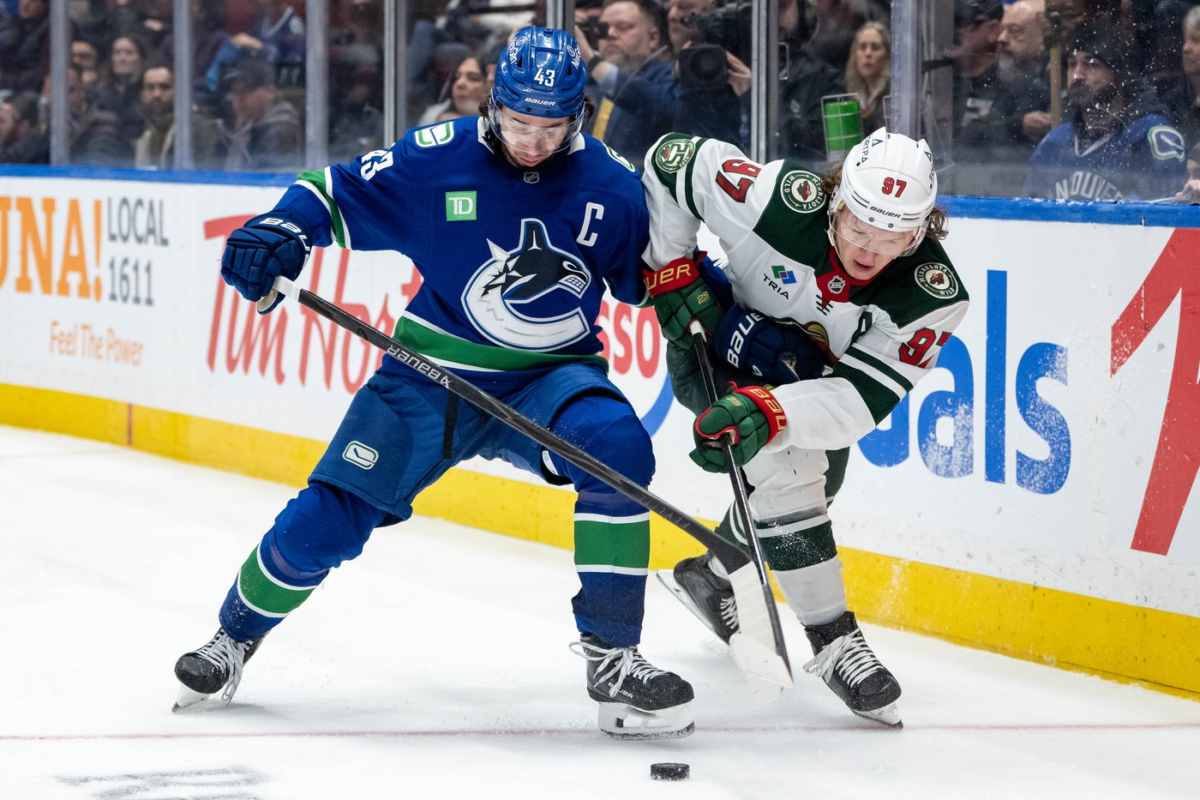
Vancouver Canucks captain Quinn Hughes has been traded to the Minnesota Wild, the clubs announced Friday, completing a franchise-altering blockbuster that reshapes the trajectory of both organizations.
In return for their star defenseman, Vancouver receives three roster players — defenseman Zeev Buium, center Marco Rossi, and winger Liam Ohgren — along with a first-round draft pick. The scale of the package underscores just how highly Hughes was valued across the league and signals a decisive pivot for the Canucks as they confront a disappointing season.
For Minnesota, the deal stands as one of the most aggressive and consequential moves in franchise history. General manager Bill Guerin has made it clear that patience is no longer the priority. The Wild have not advanced past the opening round of the Stanley Cup Playoffs since 2015, and the addition of Hughes represents a calculated push to contend immediately — particularly after the organization committed this summer to Kirill Kaprizov with the richest contract ever signed in NHL history.
At just 26 years old, Hughes is already regarded as one of the elite defensemen in the sport. Selected by Vancouver in the first round of the 2018 NHL Draft, he has developed into a perennial All-Star and offensive force from the blue line. Hughes captured the Norris Trophy in the 2023–24 season after producing a career-high 92 points and captaining the Canucks to a first-place finish. He has also been named to Team USA’s men’s hockey roster for the upcoming Olympic Games, further cementing his status among the league’s best.
Despite Hughes’ individual excellence, Vancouver’s season quickly unraveled. Entering Friday, the Canucks sat in last place in the Pacific Division with an 11-17-3 record and a minus-24 goal differential. As losses mounted, the organization began reassessing its direction. Late last month, the front office circulated a league-wide memo indicating a willingness to discuss trades involving any pending unrestricted free agents — a signal that, while not explicitly including Hughes, nevertheless opened the door to broader conversations.
With no trade protection in his contract and multiple teams eager to reshape their blue lines, Hughes soon became one of the most coveted names on the market. League sources indicated that Vancouver received at least six serious offers, but ultimately determined that Minnesota’s proposal provided the strongest combination of immediate talent, upside, and long-term flexibility.
The return gives the Canucks multiple building blocks. Buium, 20, a first-round selection in the 2024 draft, is viewed internally as a potential long-term power-play quarterback capable of stepping into some of Hughes’ responsibilities. Rossi, 24, brings proven NHL experience and offensive upside down the middle, while Ohgren, 21, adds speed, size, and developmental promise on the wing. The added first-round pick further strengthens Vancouver’s ability to reshape its roster over the coming seasons.
While Hughes never formally requested a trade, many around the league believed his long-term future in Vancouver was uncertain. Sources suggested that once his current contract expires in the summer of 2027, Hughes may have been inclined to test free agency, with a preference for playing with a U.S.-based franchise — potentially on the East Coast. Hughes spends his offseasons in Michigan, and his brothers, Jack Hughes and Luke Hughes, both play for the New Jersey Devils.
According to sources, the Devils did explore a trade to reunite the Hughes brothers, but ultimately could not assemble an offer comparable to Minnesota’s. Discussions between the Canucks and Wild reportedly began about a week ago and progressed rapidly as both sides aligned on timing and priorities.
From Minnesota’s perspective, the acquisition of Hughes instantly transforms its defensive core and power play, while reinforcing the organization’s belief that its championship window is open now. For Vancouver, the move represents a difficult but deliberate step toward a broader reset — trading a franchise cornerstone in exchange for depth, youth, and future assets.
Hughes is not eligible to sign a contract extension with the Wild until July 1, leaving his long-term status as one of the league’s most closely watched storylines in the months ahead.
